
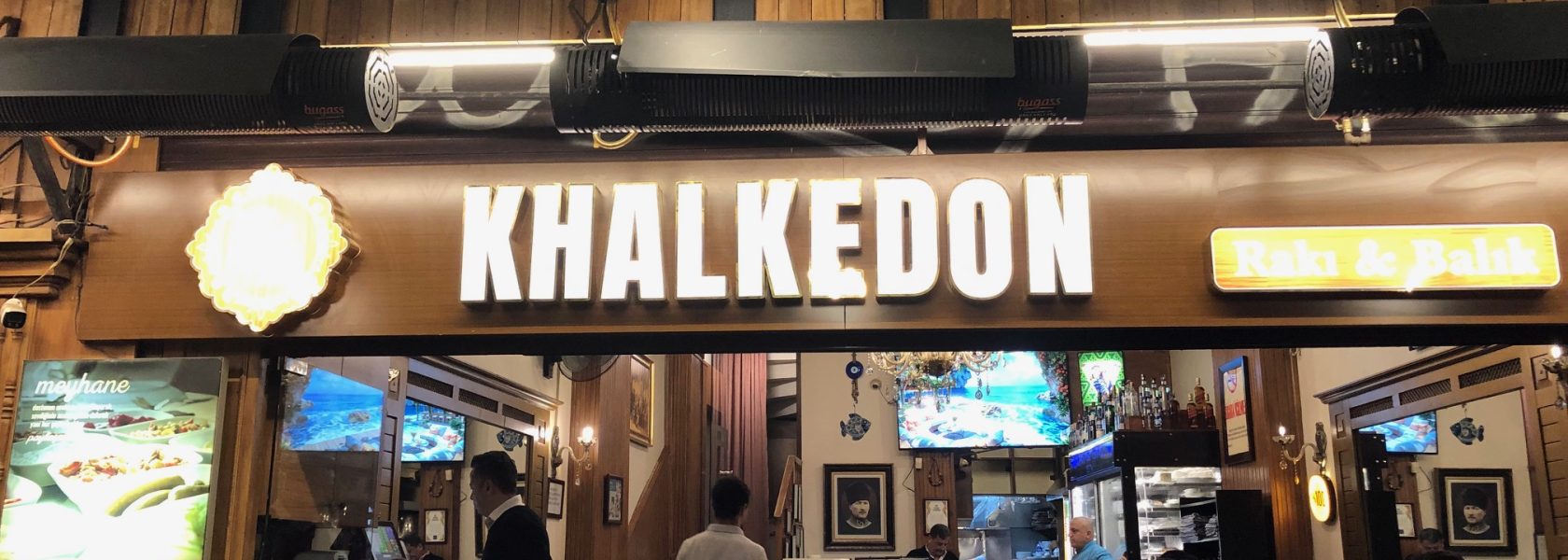
Searching for the lost Chalcedon
17 december, 2025
When visiting the modern and bustling district of Kadiköy, it is difficult to imagine it having any connection to the ancient city of Chalcedon. One of the first sights we saw when we visited on 10 November was a Starbucks, quickly followed by streets where anyone looking for anime and band merchandise, alternative clothing or regular souvenirs is bound to find something interesting. However, if you are looking for anything related to Chalcedon, you will quickly realise that absolutely nothing from that time remains on site.
For centuries, theologians have reflected on the Great Council of Chalcedon, which convened in 451 AD at what was then a major centre of Christian life. Yet hardly any traces of this period remain, as the majority of structures have been lost to time and the rest have been relocated to the Istanbul Archaeological Museum. Without new archaeological findings, the location of important structures will forever remain a mystery.
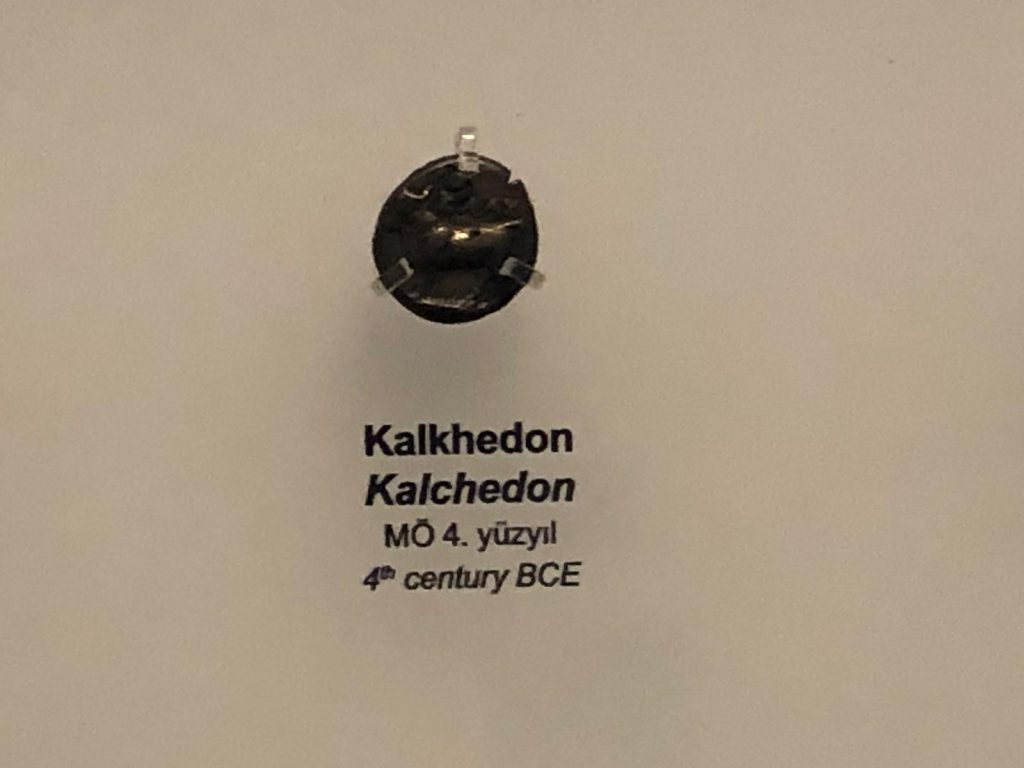
A coin from Chalcedon displayed in the Istanbul Archaeological Museum. Photo by Laura Wickström.
From a theologian’s perspective, one of the most notable historical sites is the martyr shrine and church dedicated to St. Euphemia, the virgin martyr who was killed on the site in 330 AD. The importance of this site is further elevated by the fact that the famous council is said to have taken place in the church itself. Although almost everything about the council has long been erased, the veneration of St Euphemia in the area has continued, with many churches dedicated to her throughout history. One of these remains standing and is still in active use today.
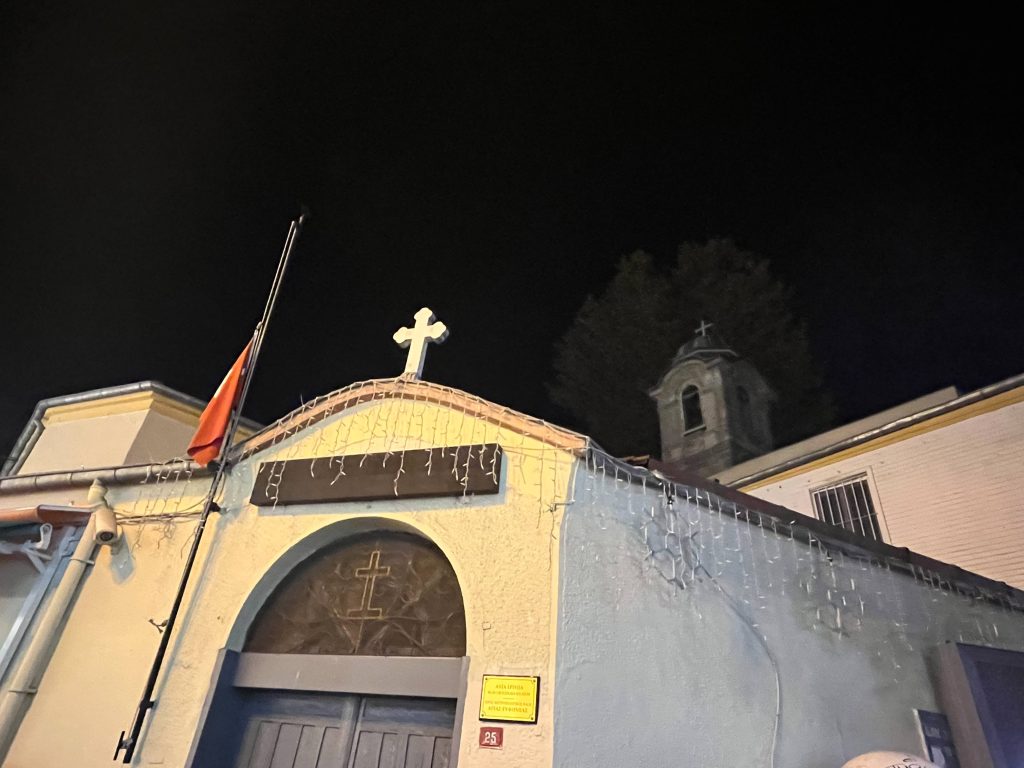
The extant church dedicated to St Euphemia. Photo by Amelie Palonen.
Many days had passed since our initial visit to Kadiköy. I thought it would be our only visit, but then we received a pleasant last-minute surprise: the opportunity to visit the Catholic Tubini Chapel, also located in Kadiköy. There, we met Pr. Bahadır Argönüla, who leads a small Lutheran congregation that usually gathers there. Our visit coincided with the preparations for the Sunday mass the following day, which was expected to be a small, intimate gathering of around ten people. Unfortunately, we had to miss it because of our scheduled departure back home.
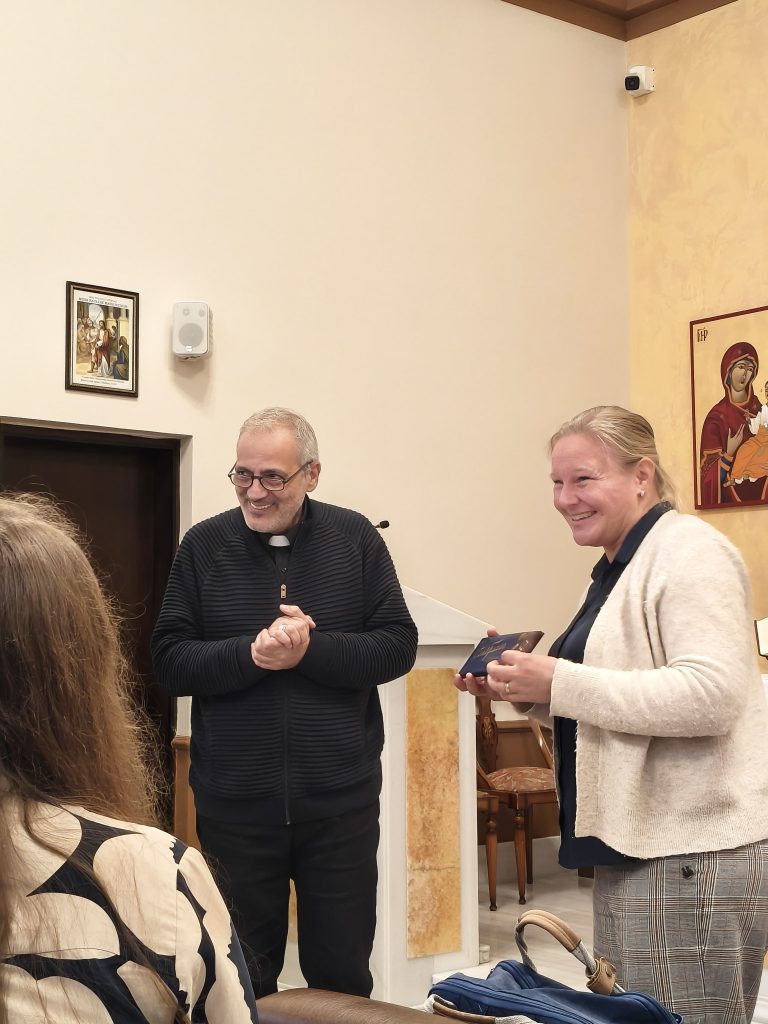
Laura Wickström gifting chocolates to Pr. Bahadır Argönüla. Photo by Mezmur Holmström.
Despite the inevitable changes that over 1,500 years will bring to the area, the Christian spirit has remained and persisted to this day, albeit only in spirit. Although the many mysteries surrounding the city once known as Chalcedon may forever be lost to the tides of history, the prospect of future discoveries keeps me keenly interested in this place I have read so much about.
Amelie Palonen
The theological course ”Interreligious Relations in Istanbul and Beyond: The role of Religion in Society, State and Secularism” is a thematic course organized by the theological subjects at Åbo Akademi University during the fall semester 2025 and culminated in a study trip to Istanbul from 6–16 November. The course is conducted in close collaboration with the Swedish Research Institute in Istanbul (SRII) and with the Finnish Institute in the Middle East (FIME). This blog text is the seventh of eight blog texts to present reflections of the study trip.