
The God Under the Dome. Dancing with the devil or obeying the one God
December 5, 2025
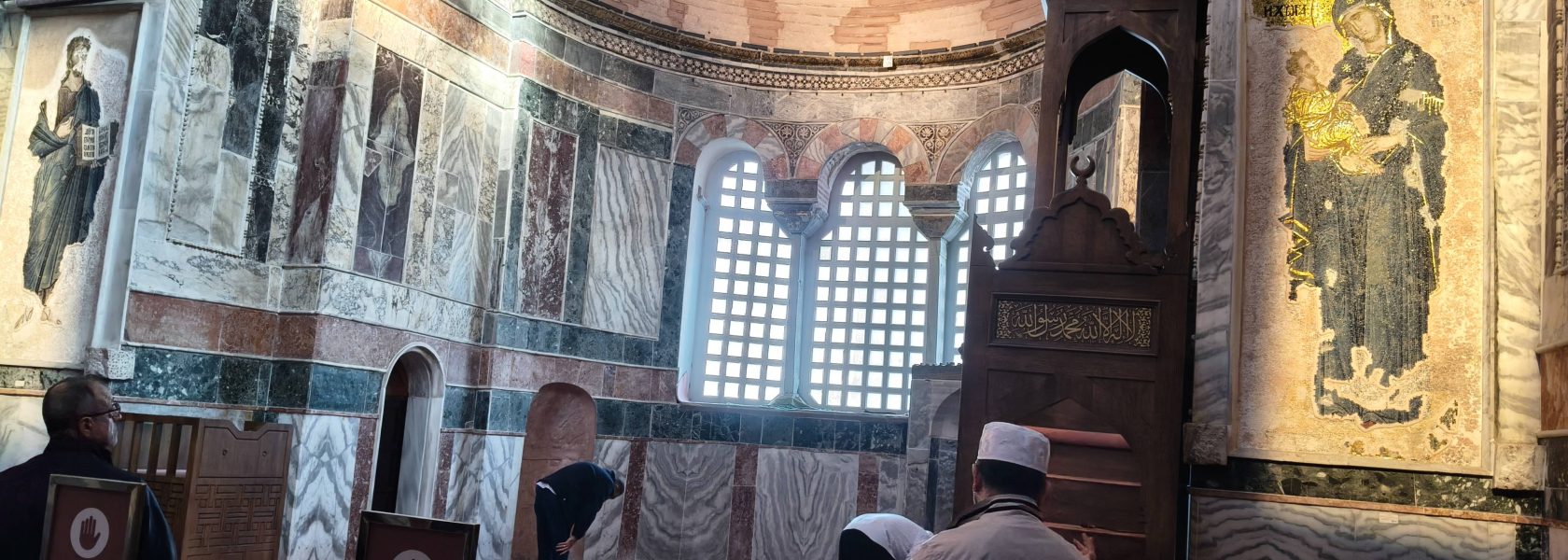
While visiting Turkey and some of its most important historical sites from a religious perspective, we stood with many different people who were all pursuing the one God under their own dome.
We discussed and learned about the pursuit of God in Islam, Judaism, and Christianity. The question slowly arose: All three religions proclaim the common belief that the God of Abraham is the one true God. Could this be true? Could the God of Abraham be something that all three religions have in common? Each religion claims that there is only one God and one right way to praise Him and be a true servant of Him (orthodoxy, ahl al-Sunna wa-l-Jama’a1). Considering that the orthodox teachings of these three belief systems are so different from each other and condemn each other, could they truly be speaking of the same God?
Shortly after our visit to Turkey, Pope Leo XIV visited the country to celebrate the 1700th anniversary of the Nicene Creed. During the celebration, steps were taken toward a more ecumenical, and perhaps interreligious, future.
The Pope met with several prominent leaders of the Abrahamic faiths.
The Ecumenical Patriarch Bartholomew and the Pope celebrated a service together. Together, they recited the creed in its original form at the Sunken Basilica of Saint Neophytos.
The Pope also visited the Sultan Ahmed Mosque, also known as the Blue Mosque. There, Emrullah Tuncel, the Istanbul province mufti, invited the Pope to join him in prayer inside the mosque, an invitation which the Pope politely declined.
The Pope also met with Isak Haleva, the chief rabbi of Turkey. They met under the term “children of Abraham.”
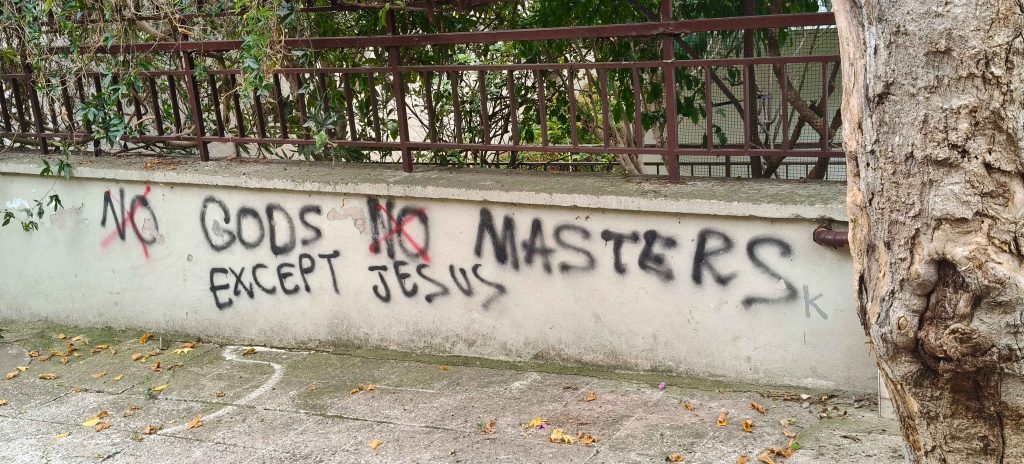
Graffiti at a wall in Heybeliada at the Princes’ Islands (Adalar) where the Hagia Triada Monastery and Seminar school is located. Picture by Mezmur Holmström.
In summary, multiple noteworthy events occurred during the three Abrahamic visits.
For Judaism, it was the first time a pope met with the chief rabbi of Istanbul.
Regarding Islam, the Pope was explicitly invited to participate in the mosque prayer. This meant that he was offered the opportunity to recite parts of the Islamic prayers with the other Islamic leaders who were present.
Together with the Ecumenical Patriarch, the Pope recited the Nicene Creed without the papal addition of the filioque.
Upon observing the Orthodox worship and teachings within each Abrahamic religion, one can find many common patterns, both visual and scriptural. Examples include praying under domes, on carpeted floors, and facing what is considered holy (Mecca, Jerusalem, or the east); vocal worship and recitation without musical instruments; and similar practices. Of course, there is also the history and high regard of Abraham.
My main question is: How far can interreligious cooperation go? These steps toward interfaith peace seem successful, but have we reached the goal? Is there more to be done? Where is the limit, if there is one?
1 The term orthodoxy is common within Judaism and Christianity. It I is appliable for Islamic faith but it is not commonly used. A more common term would be, ahl al-sunna wa-l-jamaʿa.
Mezmur Holmström
The theological course ”Interreligious Relations in Istanbul and Beyond: The role of Religion in Society, State and Secularism” is a thematic course organized by the theological subjects at Åbo Akademi University during the fall semester 2025 and culminated in a study trip to Istanbul from 6–16 November. The course is conducted in close collaboration with the Swedish Research Institute in Istanbul (SRII) and with the Finnish Institute in the Middle East (FIME). This blog text is the third of eight blog texts to present reflections of the study trip.